

TFF Group
An Opportunity after a -60% drop in the share price? A Deep Dive into the World’s Leading Barrel-Making Group, Its Bourbon Bet, and the Challenges of Navigating a Weakening Wine & Spirits Market
TFF Group: “Time Is On Our Side”
Introduction: A Century-Old Family Business
Tonellerie François Frères, now known as TFF Group (TFF), is not just a company — it is a century-old family enterprise, currently in its fourth generation. What began as a small cooperage in Burgundy has evolved into the global leader in barrel-making, serving both the wine and whisky industries worldwide.
TFF is a unique business with a strong competitive moat, though it now faces pressures from the current macroeconomic environment and structural headwinds in the alcohol industry.
Headquartered in Saint-Romain, TFF Group and its brands are long-standing partners of Burgundy’s finest wines and many of the world’s leading producers.
The company went public in 1999 and delivered a tenfold return over ~17 years. Following a strong recovery from the global pandemic in 2020, its valuation peaked at €1 billion in December 2023. However, in just two and a half years, the share price dropped from €46 to below €17, representing a decline of nearly 66%. Today, its market capitalization has returned to levels seen a decade ago.
This prompted me to take a deeper look into the business. What I found is a fundamentally strong company facing cyclical challenges.
Key Highlights
Family-owned: The founding family has retained a 71% stake since the IPO in 1999.
Market leader: Dominant position in the wine, Scotch, and bourbon markets.
Diversified operations: 27 subsidiaries engaged in forestry, wine and whisky cooperage, stave milling, oenological wood products, cask-making, and stainless-steel vat manufacturing.
Decentralized management: Each subsidiary operates independently, preserving its brand identity and know-how.
Resilient growth: Revenues have increased 10x since 1998 despite navigating multiple crises.
Experienced leadership: The fourth generation has led the group for the past two decades, consistently setting ambitious targets.
Dynamic strategy: Proven ability to move quickly, enter new markets with controlled risk, and acquire businesses at attractive valuations.
Current Headwinds
The wine and bourbon industries are experiencing significant declines in demand, forcing supply adjustments.
The business model requires long-term planning: once the wood is sourced, it can take up to 36 months before barrels are ready.
As a result, the company is likely to face at least one more difficult year, compounded by nearly $400 million in recent investments to develop the bourbon market.
Net Debt/EBITDA now stands at 3.9x — elevated for this type of business — while management continues dividend distributions.
Valuation Snapshot
Current market capitalization: ~€375 million, below the book value of inventories (€450 million).
Enterprise Value: ~€700 million (€375 million market cap + €314 million net debt).
Adjusted for ~€500 million in working capital, the implied business value is ~€200 million.
This translates to an EV/EBITDA 2025 multiple of 2.4x and an EV/average FCFF (last five years) of ~5x.
This raises the question: is TFF Group today an asymmetric investment opportunity?
To explore this, I reviewed the last 25 annual reports to understand how TFF grew from a nano-cap to a €1 billion company.
Index:
History of the Company
The Current Situation
Review of the Company Today and SWOT Assessment
Financial Analysis
Valuation and Asymmetry Test
Part I: History of the Company
How The Company Became The Leader In Wine and Whisky
This is a century-old company that has always being owned by the François Family.
1st Generation: Joseph François
1910: Creation of the tonnellerie in Saint-Romain. This gave birth of the family business and the foundation of what would become TFF Group.
2nd Generation: Robert François
1917: Robert and his brother Henri continue their father’s craft.
1942: Founding of the company Tonnellerie François Frères.
During the second generation, the company evolved from artisan roots to a true entrepreneurial venture.
3rd Generation: Jean François – The International Push

In 1959 Jean François joined François Frères.
In 1972: Jean and Noëlle François took over leadership, with a strong focus on exports:
First international customers – Angelo Gaja in Italy, Mondavi in the U.S.
Rosemount (Australia) and Catena (Argentina) become early clients.
Expansion into Europe and the New World while maintaining close ties with Burgundy winemakers.
4th Generation: Jérôme François – Internationalization and Diversification
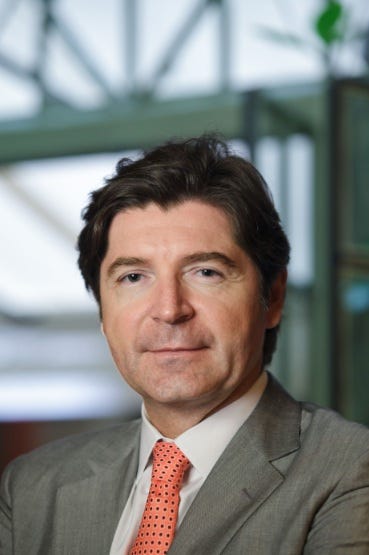
With the leadership of the current CEO, Jérôme François, the company has significantly expanded around the world and has become the leader in the market.
He has executed multiple acquisitions, creating a diversified group leading the supply of barrels with multiple brands operating independently.
I. The Early Years: From 1999 to 2007
The company went public in 1999. At the time, operations were concentrated in two core segments:
Stave Milling — Early-stage processing of raw oak into staves, the essential components for crafting high-quality wine and spirit barrels.
Wine Cooperage — François Frères had already established itself as one of the most recognized names in the industry.
Over the following decade, TFF pursued two main strategic directions:
a) Vertical Integration — Expanding upstream by acquiring stave milling companies to secure premium-quality oak for internal use, ensuring consistent quality and healthy margins.
b) Horizontal Diversification — Entering new geographies and product segments, while expanding production capacity beyond France.
A. Vertical Integration
In 2000, the company executed its first post-IPO acquisition: SO-GI-BOIS, a stave milling company. The acquisition increased self-sufficiency in oak supply from 65% to 85%.
📌Stave milling involves splitting and shaping oak logs into staves—the long, narrow, curved planks later assembled into barrels—which are then seasoned outdoors for 2–3 years.
This acquisition marked a decisive step toward vertical integration, securing raw material supply and preserving high product quality.
B. Horizontal Diversification
While integrating upstream, TFF simultaneously expanded horizontally into new markets and product categories:
Australia & New Zealand (2002): Partnered with Foster’s Group to acquire a 49% stake in AP John, an Australian cooperage. The €4.5 million investment shifted nearly 50% of production outside France. In 2007, TFF acquired the remaining 51% along with two distribution businesses in Australia and New Zealand.
China (2007): Established a cooperage plant, Demptos Yantai, to serve the fast-growing Chinese market.
Large Casks (2003): Founded Foudrerie François, specializing in the manufacture of high-capacity tuns and vats.
Arôbois (2007–08): Entered the complementary market of oak-based enological products through the acquisition of Arôbois (France), which produces chips, cubes, and staves that impart structure and flavor to wines and spirits.
By 2007, revenues had risen from €50 million in 1999 to €91 million.
II. Navigating New Frontiers: Expansion into Whisky (2008–2011)
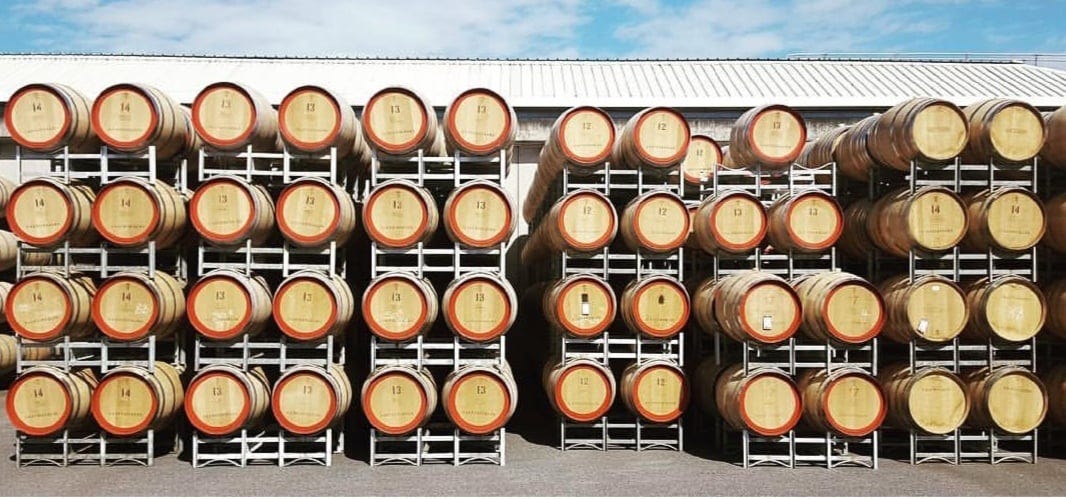
By 2008, TFF held more than 20% of the global wine barrel market and was generating €100 million in revenue. Despite the global financial crisis, management maintained its ambitions and moved decisively into the whisky market through a highly accretive acquisition strategy.
The expansion was guided by six core principles:
Decentralized Management — Lean, independent teams with accountability.
Specialized Units — Small, focused production sites tailored to their markets.
Secure Supply — Over 75% self-sufficiency by 2010, reaching 100% thereafter.
Financial Strength — High integration, low leverage, and resilience to crises.
Disciplined Growth — Step-by-step expansion via partnerships, acquisitions, and joint ventures at fair valuations.
Synergy & Sustainability — Efficiency-driven innovation, such as recycling wine barrels for whisky or repurposing oak offcuts.
Acquisition of Speyside Cooperage (2008)
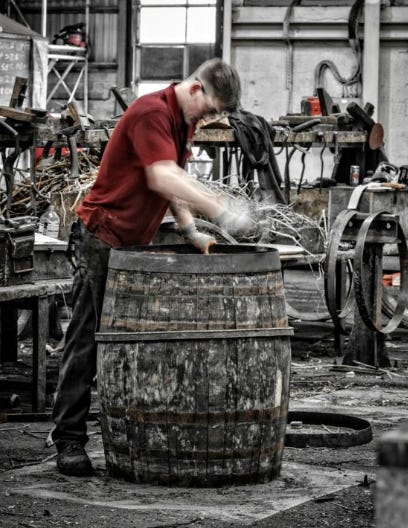
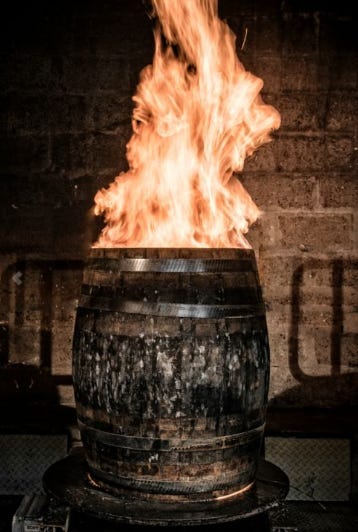
The flagship move was the acquisition of Speyside Cooperage, a family-owned Scottish business founded in 1947 with two production sites. Its core activities were:
Maintenance and repair of whisky casks.
Trading of recycled barrels (mainly ex-bourbon and ex-wine), reselling ~300,000 annually.
At the time, Speyside commanded 50–60% of the Scotch whisky cask market and generated ~€16 million in revenue.
The €6.8 million acquisition, at just 3–4x EBIT, instantly positioned TFF as the leader in the whisky cask market and demonstrated highly disciplined capital allocation.
Speyside’s operations today include:
Speyside Cooperage (Craigellachie): Located in the heart of Speyside, home to two-thirds of Scotland’s distilleries.
Speyside Alloa (near Edinburgh): Supplies leading distilleries in Scotland and abroad.
Speyside Kentucky (U.S.): Located in Bourbon County, supporting the maturation of premium bourbons and whiskies.
Further Whisky Acquisitions
Isla Cooperage (2009): Founded in 1989 and located in Keith, near iconic distilleries such as Glenfiddich, Glenlivet, Macallan, and Mortlach. The company focused on barrel repair, restoration, and brokerage of used casks sourced globally.
Camlachie Cooperage (2011): A family-owned business founded in 1961, with £3 million in revenue and a small, highly skilled workforce of 11 employees.
These acquisitions cemented TFF’s market leadership in whisky cooperage.
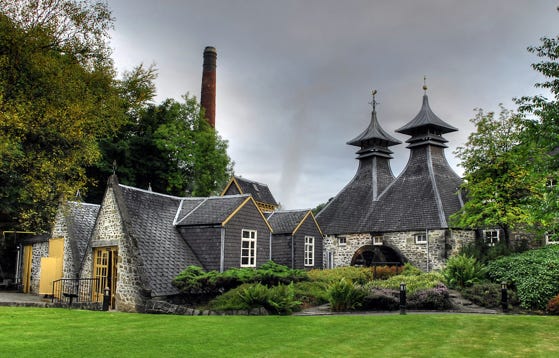
Why Scotch Whisky? — The “Wine” of Spirits
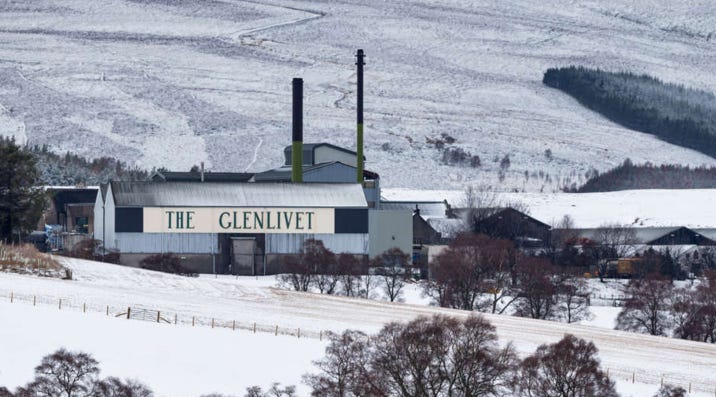
Oak is central to whisky making. Out of 300+ oak species worldwide, only a few are suitable for aging spirits. Quercus Alba (American white oak) is the most prized, valued for its tight grain, low porosity, and workability.
Barrels Shape the Spirit: By law, Scotch whisky must age at least three years in oak casks, with many single malts maturing for 8+ years. Unlike Cognac or Bourbon (aged in new oak), Scotch traditionally uses second-life barrels (ex-bourbon, ex-wine), often followed by “wood finishing” in a second cask.
Scotland: The Global Whisky Hub: With ~80 distilleries, Scotland produces ~700 million bottles annually and exports more spirits than any other country. At any moment, 15–20 million barrels (3 billion liters) of whisky are aging in warehouses across the country.
New Ventures in Oenology Products
TFF also expanded into oenological adjuncts through its partnership with Stavin, the global leader in oak alternatives, based in California’s Napa Valley. Stavin is the exclusive supplier of Hungarian oak and is known for:
Leadership: Recognized market leader with a strong presence.
Innovation: Combining advanced R&D and precision toasting with traditional craftsmanship.
Premium Materials: French, American, and Hungarian oak, seasoned for three years.
Family-Owned Values: Continuity, quality, and long-term relationships.
The collaboration began as a 50/50 joint venture, laying the groundwork for potential full acquisition in the future.
III. Consolidation of TFF Group as the #1 Player in Wine Cooperage (2012–2014)
At the start of the 2010s, the wine market was under pressure, with production at historic lows. The cooperage industry endured three consecutive years of decline.
In 2012, as the market began to recover, Jérôme François made a decisive move: acquiring Radoux, the flagship brand of French competitor Oeneo.
Key Highlights of the Radoux Acquisition (2012):
Revenue: ~€30 million (25% of TFF’s wine segment revenue at the time).
Operating Margin: ~20%.
Purchase Price: €45 million (7.5x EBIT multiple). For context, TFF traded at 7.5–11x EBIT in 2012.
Assets: 4 cooperages, 1 large cask facility, 1 stave mill, 1 distribution subsidiary.
Brands: Radoux, Victoria, Pronektar.
Export Share: 80%.
Vertically Integrated: 100% self-sufficient in oak supply.
The acquisition was both strategic and attractively priced, reinforcing TFF’s leadership and adding premium brands.
In 2013, the company formally changed its name to TFF Group, reflecting its evolution from a single cooperage into a diversified conglomerate spanning wine and whisky.

Subsequent Acquisitions (2013–2014):
Tonnellerie Berger & Fils (2013): A family-run cooperage renowned for its quality among Bordeaux producers, with growing international recognition.
Maury et Fils (2014): Based in Bordeaux, further strengthening TFF’s positioning in France’s premium wine regions.
IV. The Bourbon Bet and Broader Diversification (2015–2024)
The Bourbon Bet
The Bourbon Expansion
By 2015, TFF was firmly established as the global leader in the wine cooperage industry, with ~30% market share across barrels, oenology products, and large containers. In parallel, the Group had become the world’s #1 independent cooper in Scotch whisky.
The next frontier was Bourbon. In 2015, TFF announced plans to enter the U.S. bourbon barrel market, targeting a 15% share within five years of a market producing 2.4 million barrels annually.
🗣️"A niche and rare market, the Bourbon barrel offers numerous synergies to be immediately leveraged by the Group’s other production units: for wine cooperage, in terms of sourcing American oak; for whisky cooperage, in terms of sourcing used barrels, as barrels that have held bourbon are sought after for the maturation and aging of fine whiskies."
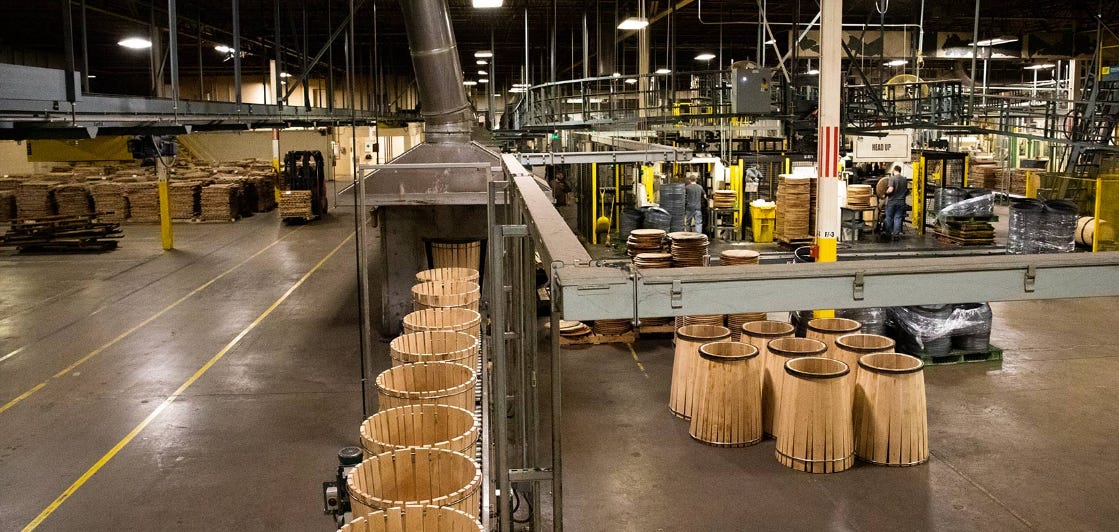
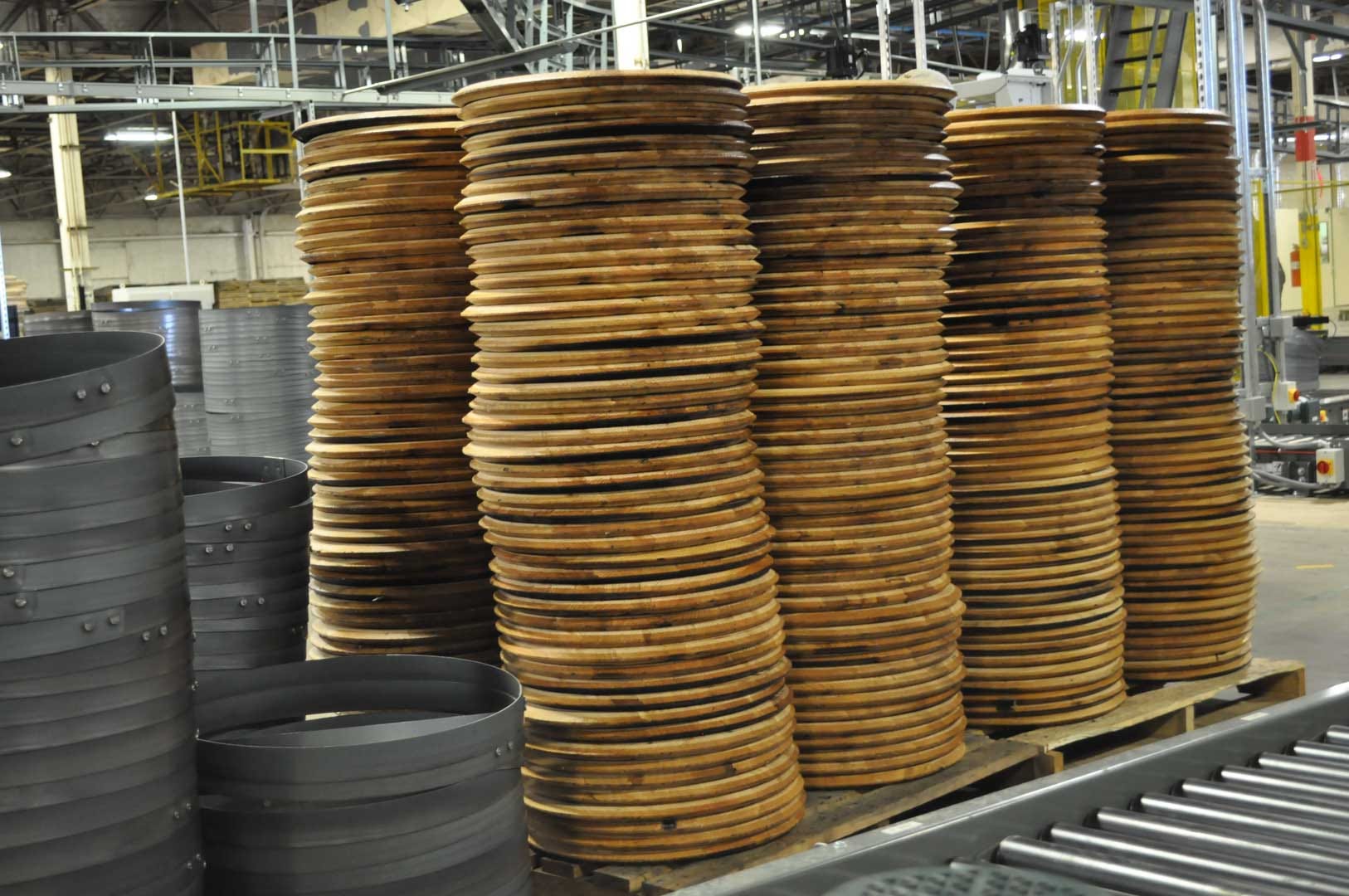
To serve a rapidly expanding market, TFF Group implemented significant resources to expand its industrial capacity:
Modern Stave Mill: Capacity to produce staves for 130,000 barrels annually.
New Production Plant: A 20,000 m² state-of-the-art facility designed for 400,000 barrels per year.
€37 Million Initial Investment: €17 million in machinery and equipment; balance in raw materials and receivables.
Over the following years, TFF committed €340 million to its Bourbon strategy:
€190 million in capex for new facilities.
€150 million in working capital, given the 12–36 month drying cycle required for oak.
By 2024:
Revenue: ~€200 million (41% of Group sales).
Output: 840,000 stave sets produced, 700,000 barrels manufactured.
Margins: EBITDA 20%, EBIT 17%.
This bold move diversified TFF’s revenue base but also significantly increased capital intensity.
Reinforcing Scotch Operations
While scaling in Bourbon, TFF also reinforced its Scotch whisky business during 2017.
The company acquired Barrels Unlimited Inc., a firm specialized in repairing and trading with 2 production sites in Indiana and California, 50 employees.

During 2019 the company developed a new production site near Edinburgh dedicated to barrel repair, refurbishment, and trading, employing 20 staff members. With this new facility, the Group was now able to process 1,000,000 used casks per year.
Continued Expansion in Wine Cooperage
Despite the heavy Bourbon investments, the François family maintained focus on core wine operations, continuing its acquisition-led growth strategy.
During the decade they made several acquisitions to continue strengthening their capabilities and diversifying the business.
Idelot (2016)

Forestry operator supplying TFF’s main stave mill (€9m revenue, of which €3m from TFF). The deal reinforced upstream integration, with founder Antoine Idelot retaining a minority stake. By 2017, TFF’s French stave mills supplied 90% of its needs; 80% of oak was sourced from the Office National des Forêts (ONF).
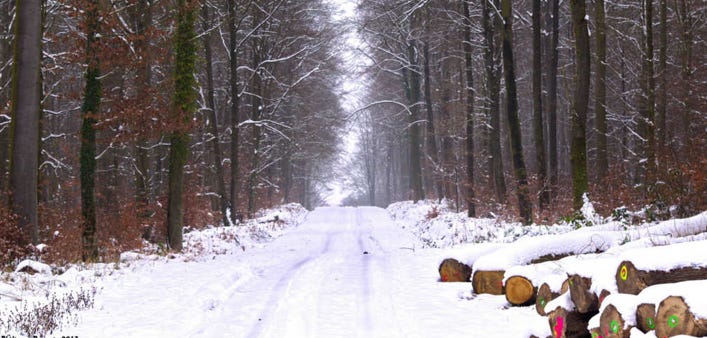
By 2017, TFF's stave mills supplied 90% of the oak wood used by the Group in France. 80% of the oak purchased in France comes from the National Forestry Office (ONF).
About ONF
The Office National des Forêts (ONF) in France is a public agency responsible for the sustainable management, protection, and development of public forests and natural areas throughout the country.
Main Functions:
Forest Management: The ONF manages nearly 11 million hectares of public forests, which account for about one-quarter of France's total forest area.
Timber Production: It is responsible for harvesting and commercializing around 40% of the timber sold in France.
Environmental Protection.
Policing and Surveillance, etc.
Some of the main forests are located in the Northern France:
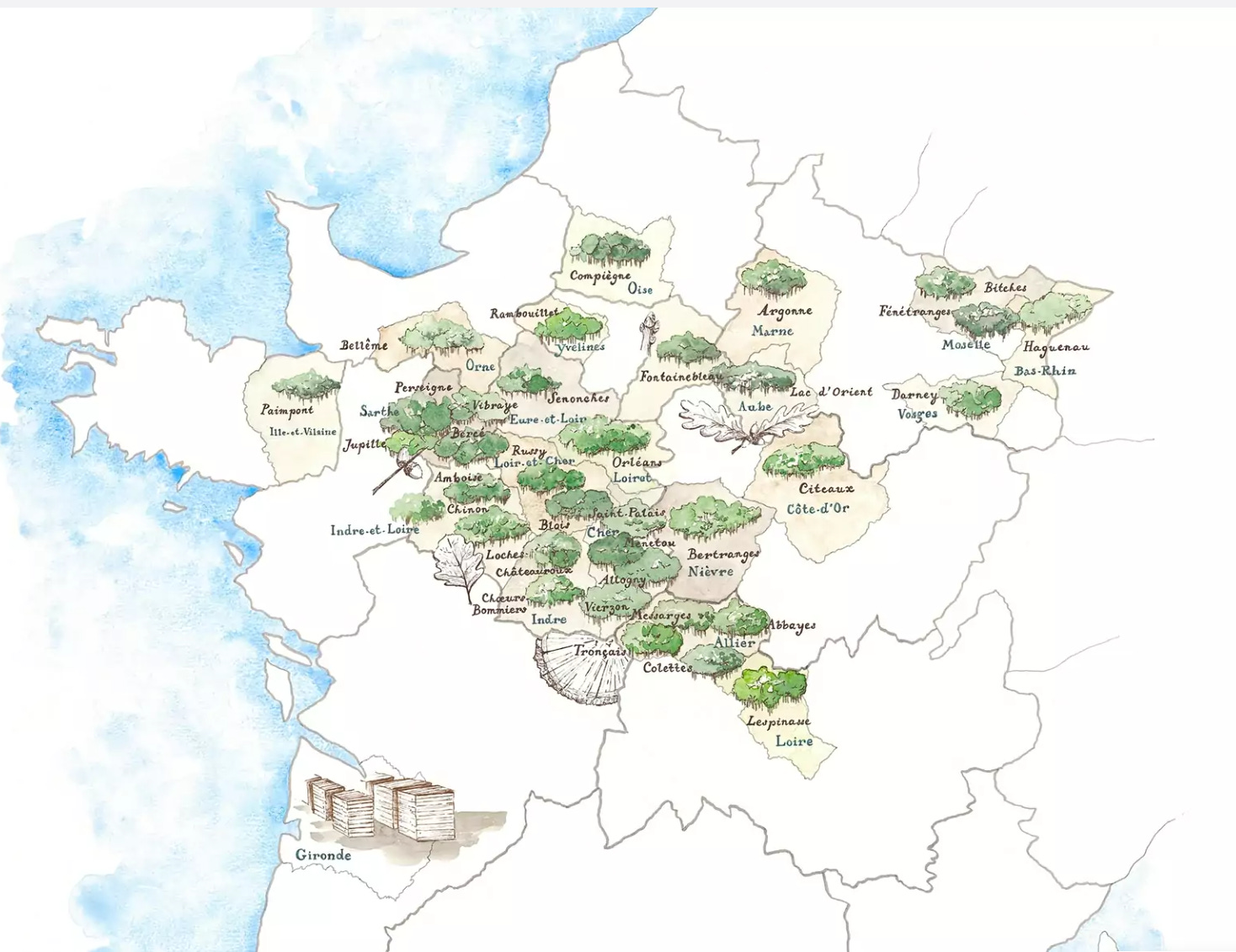
Lejeune (2016)

A family-owned specialist in stainless steel wine vats, Lejeune marked TFF’s first move outside of wood.
Known for innovation (floating-lid and conical tanks), Lejeune diversified TFF into non-wood container solutions.
The Lejeune family remained involved to support further development. The company generated €5 million by the time of the acquisition and generated €7 million during 2025, signaling it was a good investment for the group.
Tonellerie Darnajou (2019)
Founded over 60 years ago in Lalande-Pomerol by Pierre Darnajou, Meilleur Ouvrier de France, the cooperage become a benchmark in marrying wood and wine. Under Vincent Darnajou, a second site opened in 2003 to produce the iconic 225-liter barrels, while the Artigues de Lussac workshop crafts larger casks for a premium clientele.
Supplying oak barrels to the most prestigious Bordeaux Grands Crus, Darnajou generated €7M in 2018 and now strengthens TFF Group’s strategy of integrating high value-added brands for the luxury wine and spirits sector.
Bernard Gauthier Stave Mill and Gauthier Frères (2020)
In 2020, TFF acquired Bernard Gauthier Stave Mill and Gauthier Frères Cooperage. A family-owned companies by the two brothers, one is an oak staves manufacturer, the other a cooper!
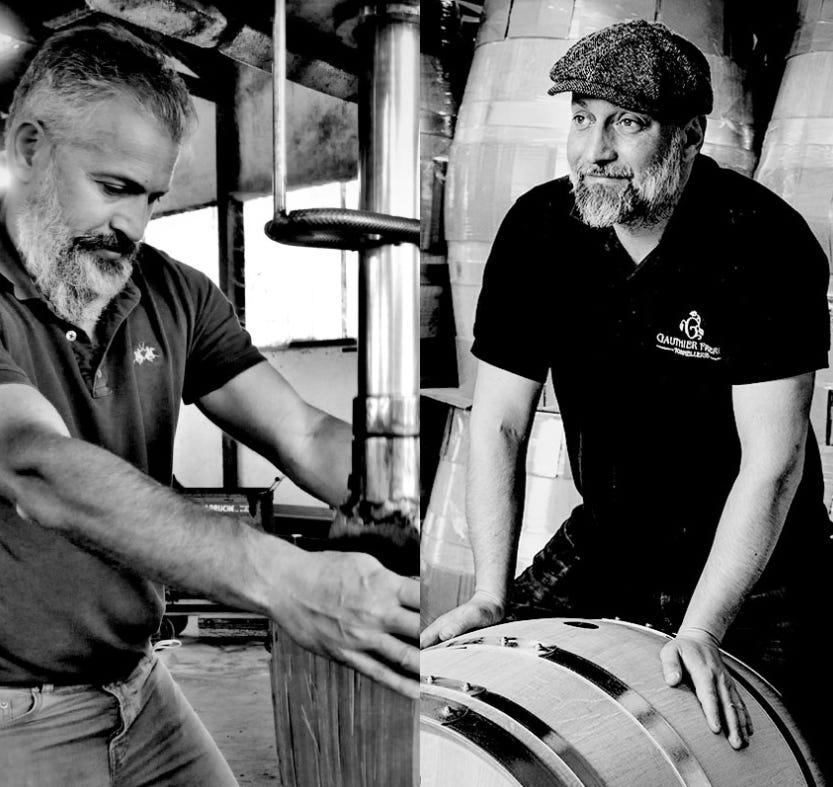
Both the stave mill and the cooperage work with some of the most prestigious wine estates, carrying forward a tradition of excellence deeply rooted in the region. Notably, Bernard Gauthier Stave Mill has long been a trusted supplier to several TFF Group cooperages, including Tonnellerie Darnajou.
📌This has been a repeated movement by Jérôme Francois. He has acquired some of it suppliers several times to vertically integrate the business. He did the same with Idelot. Many of these businesses are family companies, that remain managed by the family after being acquired by TFF
Strategic Partnership with Tonnellerie Remond (2022)
TFF Group, faithful to its historical strategy of consolidating expertise in the production of wine-aging products, entered into a partnership with Tonnellerie Remond, acquiring a 55% stake in the company.
Tonnellerie Remond is renowned for its craftsmanship, particularly in French oak barrels for prestigious wineries, and its reputation complements TFF’s ambition to offer the finest products to global wine producers.
Acquisition of a Stake in Goulard & Fils (2023)

In November 2022, TFF Group acquired a 51% stake in Goulard & Fils, a forestry operation specializing in the production of staves, oak staves, and oenological products for professionals in the wine and spirits industry, further strengthening its supply of oak.
The family continued to lead the business after the acquisition.
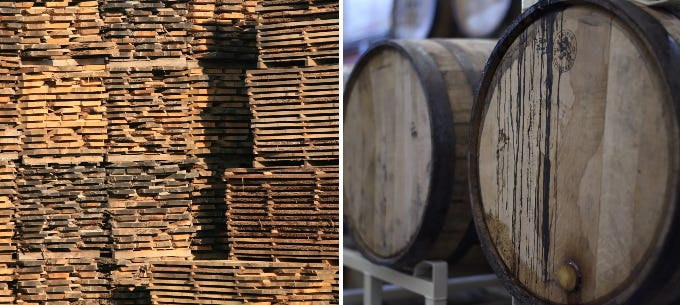
V. TFF Group Today: Uncertainty Amid a Weak Alcohol Market
A Challenging Market Environment
After several strong post-pandemic years, the alcohol industry has entered a period of weakness. For suppliers like TFF Group, the downturn is particularly challenging given the long production cycle of barrels (12–36 months).
Key structural headwinds:
Weaker consumer budgets following a sharp rise in the cost of living.
Generational shifts, with younger consumers spending less on alcohol.
Health and moderation trends, increasingly reducing consumption.
In my view, weaker disposable income is the primary driver of the slowdown — consumption trends did not contract meaningfully when households had excess savings in 2022.

During last year, production in TFF’s markets have significantly decreased, and consumption is being reduced:
Bourbon: Consumption fell only -2.7% YoY, but production declined -25% due to record-high inventories.
Scotch: Volumes grew +3.9% YoY, but value declined -3.7%, suggesting destocking. TFF’s sales volumes fell -21% (partly offset by +11% price increases).
Wine: Still under pressure, with production -4.8% and consumption -3.3%, reaching the lowest consumption levels in decades.
The Bourbon Bet is Under Pressure
2025 marked the completion of TFF’s Bourbon expansion — an investment of ~€360 million resulting in:
9 stave mills and 2 cooperages in the U.S.
Capacity of 750,000 barrels/year, equivalent to ~1/3 of U.S. production.
Industry production contracted -25% in the last year.
Bourbon inventories reached record highs, exceeding 12 million barrels.
TFF holds ~640,000 stave sets in inventory (~12 months of normalized production).
The segment reported very weak results in the last fiscal year:
Segment revenue declined -17% YoY.
EBITDA margin fell from 20% (2024) to 16% (2025).
ROCE dropped to ~4%, down from 8% in prior years.
To restore profitability, management announced significant layoffs in the Bourbon division of around 200 people.
The Company is Now Highly Leveraged
After the significant investments, and the fall of EBITDA due to lower production rates, the net debt increased by ~€50 million, reaching a ND-to-EBITDA ratio of 3.9x.
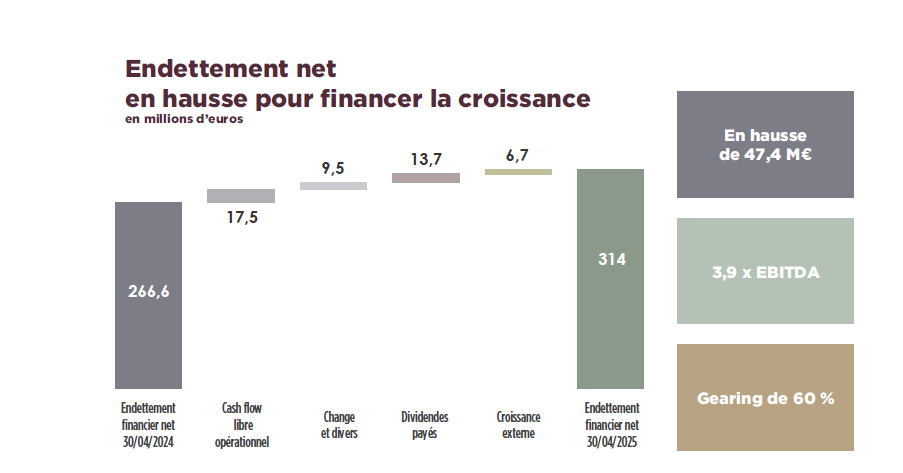
We will examine later whether the balance sheet remains sustainable.
Outlook: More Difficult Years Ahead
Guidance 2026/2026: “Our turnover is expected to fall by around 20% with an erosion of our profitability levels.”
To tackle the new environment, the management is adapting its production capabilities.
Expectations for the year are very weak:
Bourbon: Demand-supply imbalance expected to persist.
Whisky: Lower production to align with subdued demand.
Wine: Another contraction anticipated.
The investment cycle in Bourbon is complete, but the industry downturn has arrived just as capacity peaked.
Earnings declined by 44% during 2025 fiscal year, and we can expect more to come this year.
Key Question for Investors
Is this downturn cyclical — a temporary imbalance of supply and demand — or structural, marking a new paradigm for the alcohol industry?
If TFF weathers this storm, can it recover after losing nearly 65% of its equity value?
This is the central question we will address in the next section, available exclusively for premium subscribers.
